 Omni-fMRI
: A Universal Atlas-Free fMRI Foundation Model
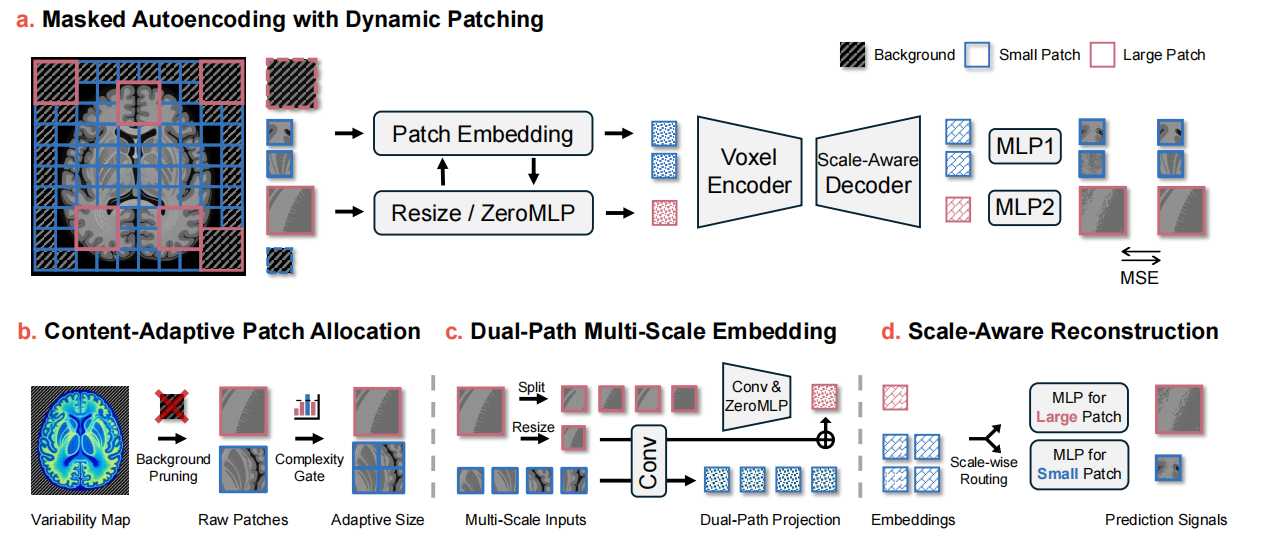
Dynamic patching enables efficient, atlas-free representation learning directly from voxel-level fMRI.
I study how we can learn useful representations from the human brain.
I am an undergraduate in Biomedical Engineering at Shenzhen University, and a visiting research student at the Neural Computing and Control (NCC) Lab, SUSTech, advised by Prof. Quanying Liu.
My research focuses on NeuroAI, particularly foundation models and representation learning for fMRI. I am also exploring trustworthy AI systems with JEPA and uncertainty-aware learning.
More work from our team: fMRI Atlas
* Equal contribution · † Corresponding author
Omni-fMRI
Dynamic patching enables efficient, atlas-free representation learning directly from voxel-level fMRI.
 FlexiBrain
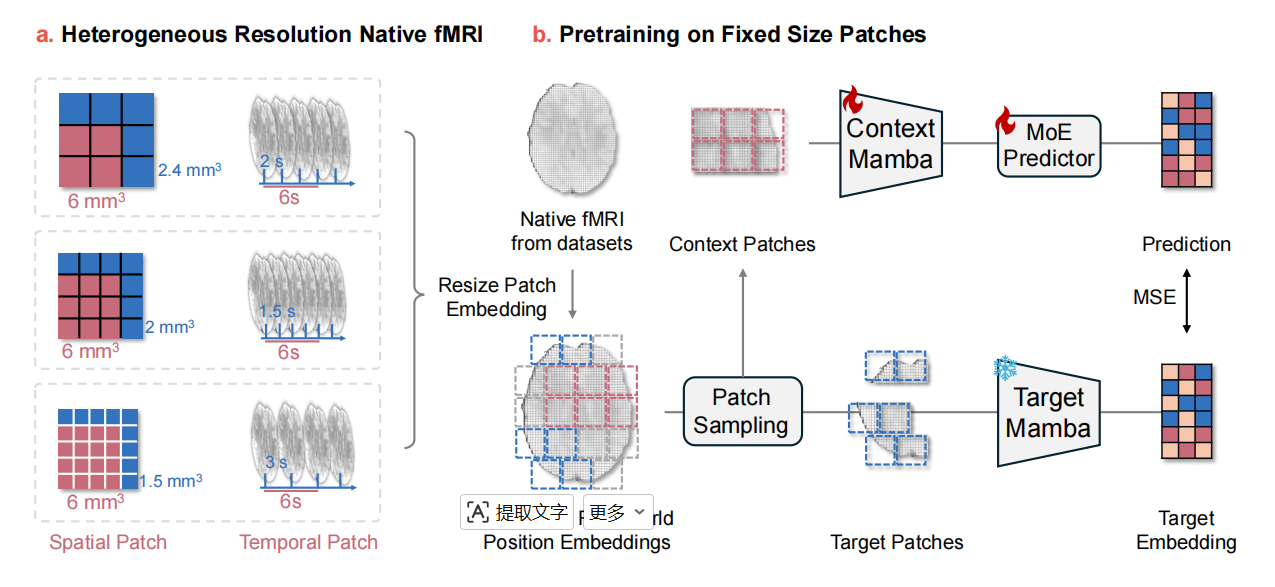
Physical-unit patching and Mamba-JEPA learn native-space fMRI representations across different acquisition resolutions.
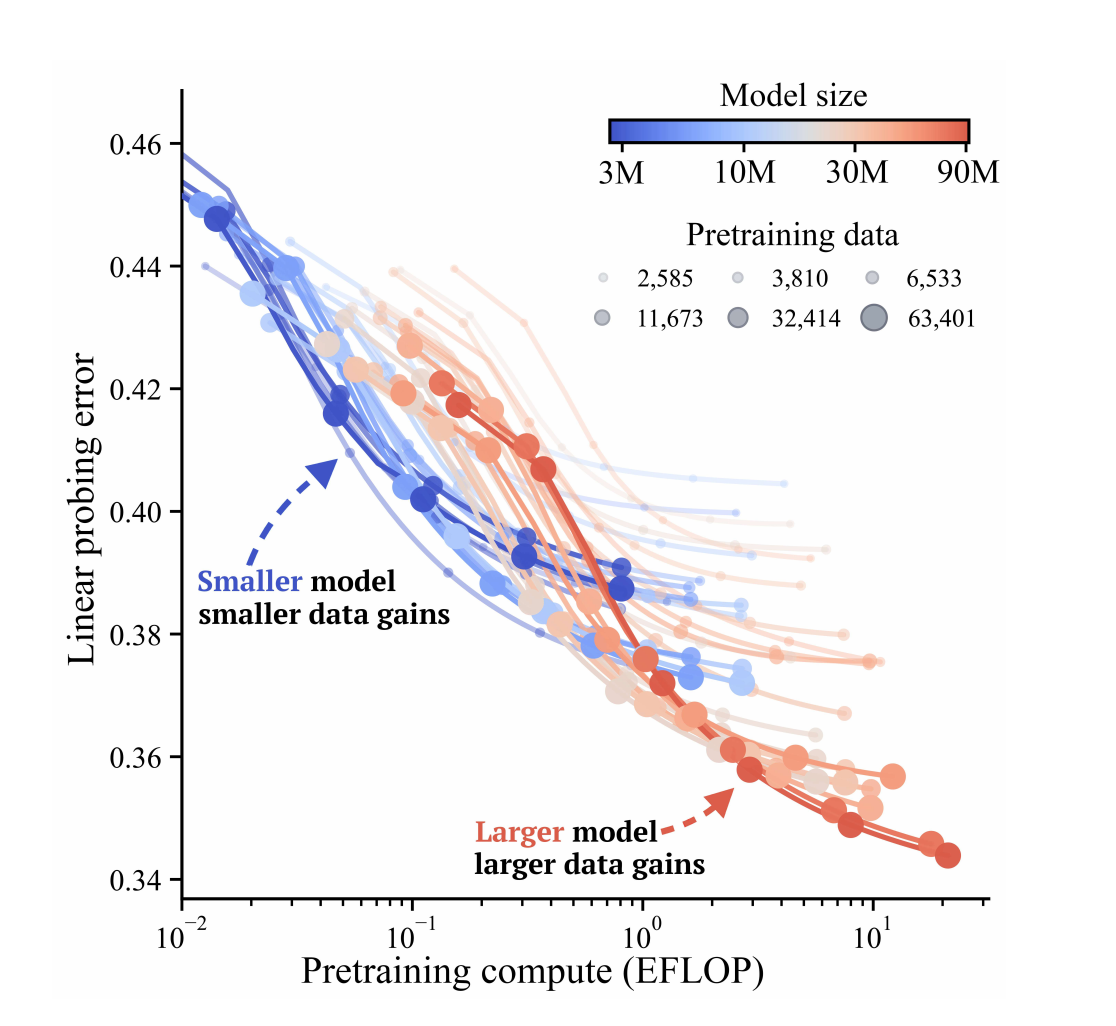 Scaling fMRI models
A controlled scaling study reveals how data size, model capacity, and training duration jointly affect fMRI performance.
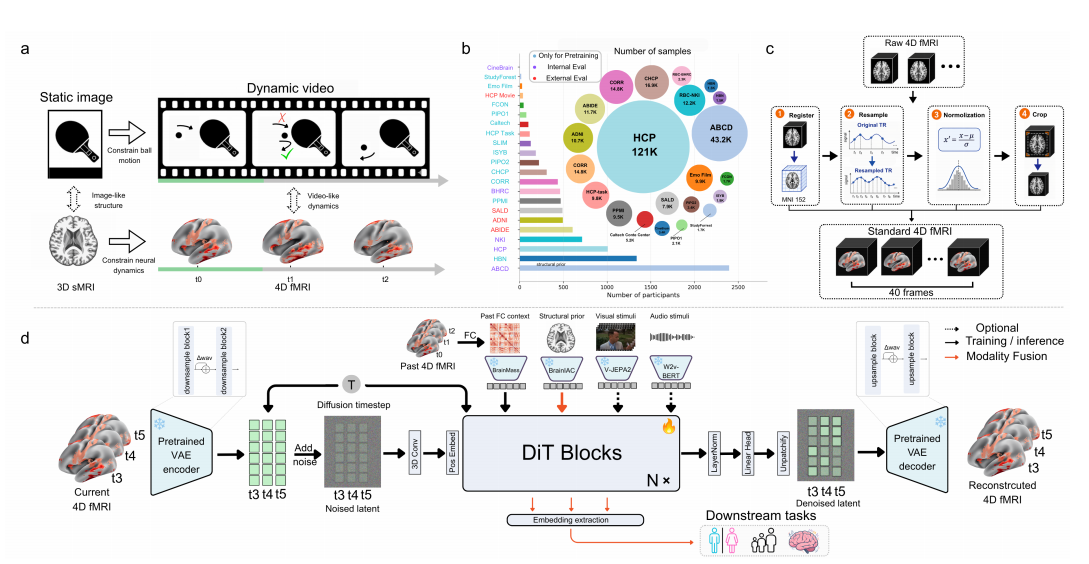 BrainWorld
Structural MRI guides the generation of whole-brain fMRI sequences for modeling brain dynamics and learning transferable representations.
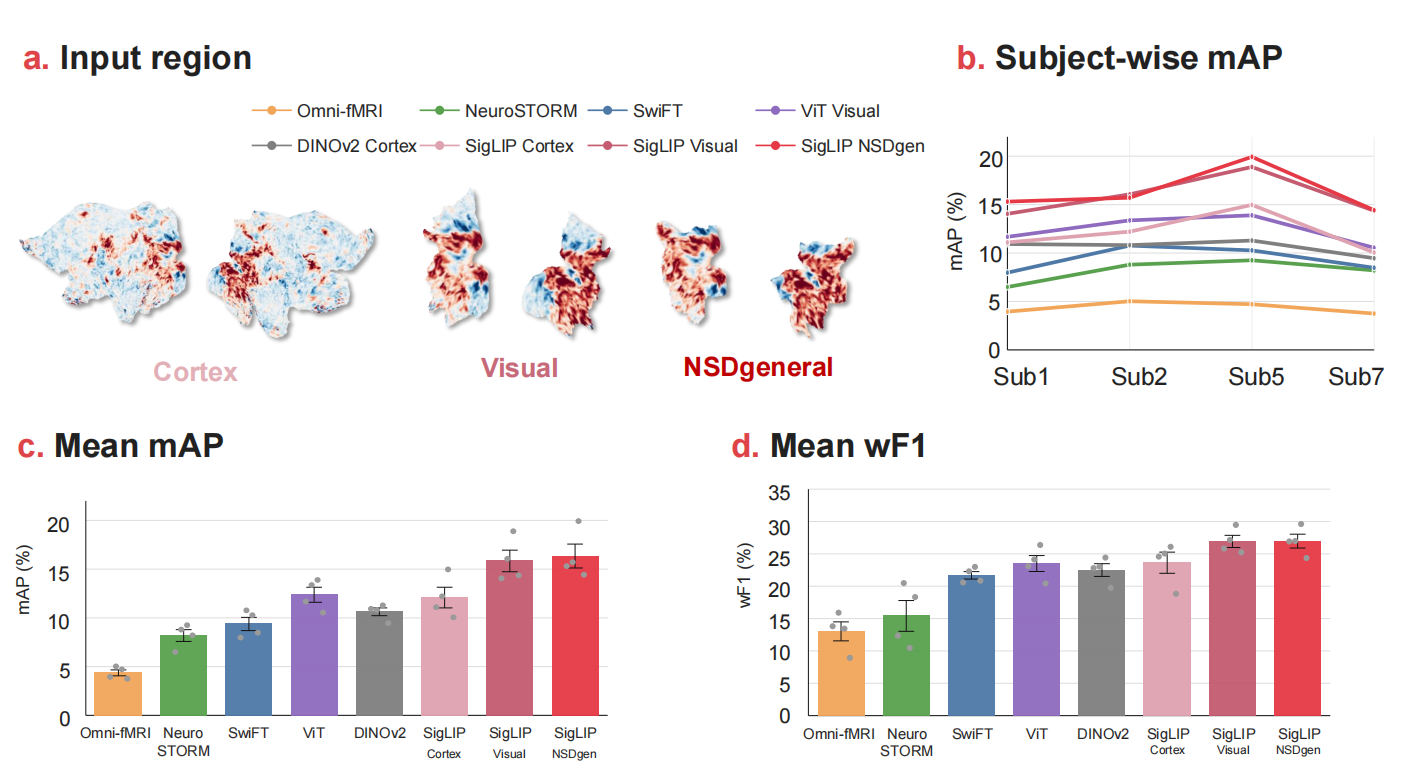 FlatCLIP
A frozen image foundation model extracts fMRI representations from geometry-aware cortical flatmaps.
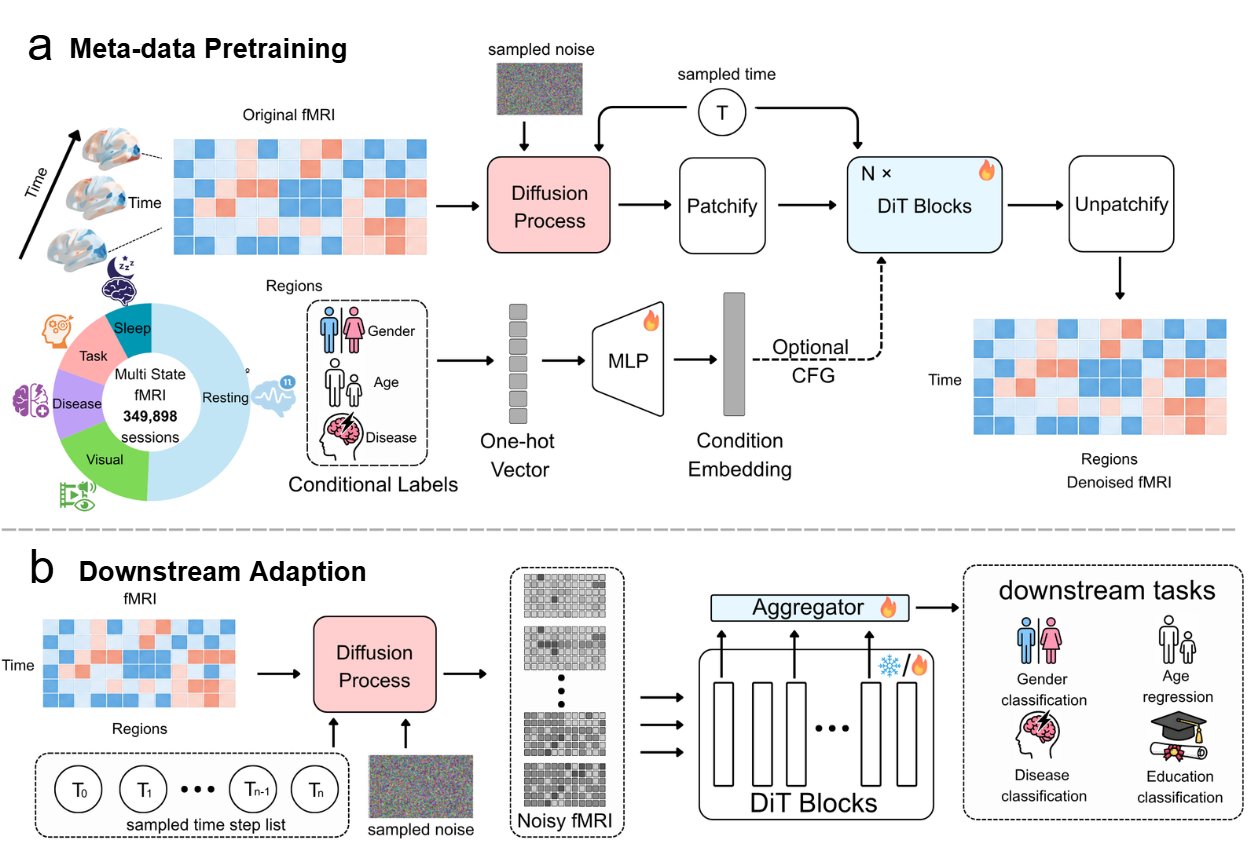 Brain-DiT
Metadata-conditioned diffusion pretraining learns multi-scale fMRI representations across diverse brain states.
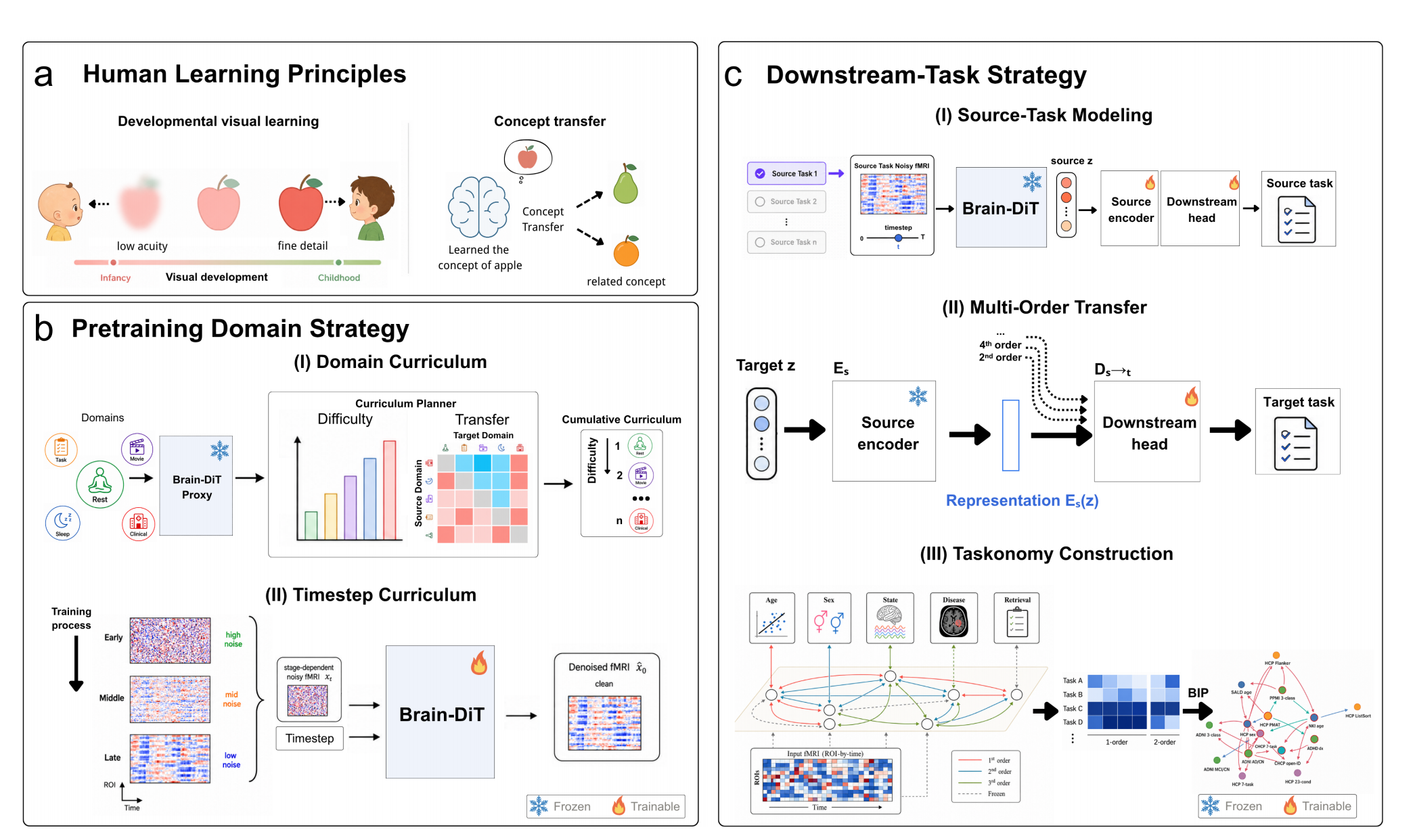 BrainTaskonomy
Measured relationships between fMRI domains and tasks guide pretraining curricula and budget-aware transfer learning.
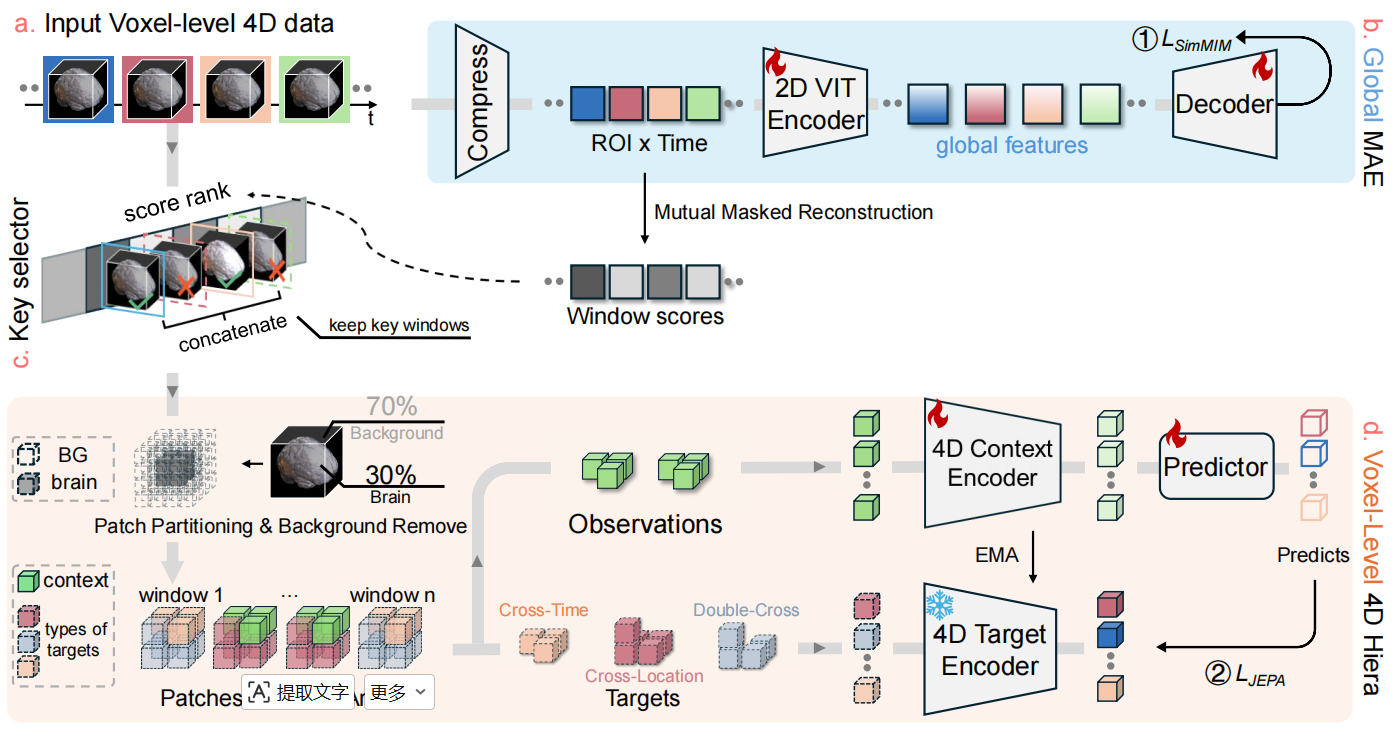 SLIM-Brain
Salient-window selection and hierarchical encoding reduce the data and memory costs of voxel-level fMRI modeling.
Visiting Research Student · NCC Lab
Advisor: Prof. Quanying Liu · Since July 2025
B.Eng. in Biomedical Engineering
Expected June 2027